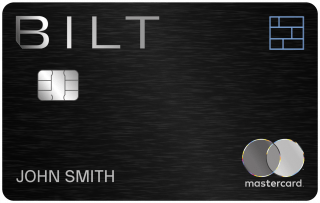
The points and miles world is all a-flutter today with the launch of Bilt 2.0. While everyone and their brother has an article, post, or video up about this already, I wanted to add my thoughts to the pile. I will give you a quick overview of the changes including the new Bilt 2.0 credit cards and my opinion on which is the best option for now.
New Card Issuer
First and maybe most important, Bilt is switching from Wells Fargo to Cardless, a fellow fintech, as a card issuer (and for back end billing). Wells Fargo was losing a ton of money per month on Bilt as many people were charging rent and then five very small transactions (or in my case using it for 3x dining which isn’t very profitable for a card issuer) that were required in order to earn points on the rent payment. Most people weren’t using it as a 1x everyday card with any significant spending. Wells Fargo ended their agreement with Bilt two years early and Bilt is issuing new cards with Cardless, which is a much smaller company. The concern for me is customer service. Hopefully Bilt will support its cardholders specifically without leaning on Cardless too much as I expect most of the Cardless support is AI chatbots.
Your old Bilt card will convert to a Wells Fargo Autograph card unless you close it by February 6th. I won’t go into the specifics of that card, but it’s a decent no-annual fee points earning card and Wells Fargo has transfer partners as well.
Mortgages
Beyond rent, Bilt is going to allow people to earn points on mortgage payments going forward. This will bring a huge new audience to Bilt, who are older, wealthier and have higher credit card expenses. Bilt claims that 99% of mortgage processors will qualify to pay via Bilt so this could be great if you have a mortgage. If you also pay someone’s rent (kids in college, parent in assisted living, etc.), fear not because you can pay an unlimited number of rent/mortgage payments with no cap on the total amount. But going forward, there is a 3% fee to pay your rent/mortgage this way. How do you offset that fee? With Bilt Cash.
Bilt Cash
Bilt Cash is a new currency being rolled out by Bilt which is a way to offset fees on rent/mortgage payments. Essentially, you earn 4% Bilt cash for every dollar in spend (for non rent/mortgage transactions) you put on the card. What is Bilt Cash used for? Primarily you can use it to offset your rent/mortgage payment. For every dollar of spend you earn 4 cents which you can apply to that rent/mortgage fee directly. Example: Assume your mortgage/rent is $3,000 per month. That would require $90 in fees at 3% if you are paying through Bilt. If you spend $2,250 on your card in non rent/mortgage categories to offset the fee, you would earn those points on rent/mortgage fee-free plus whatever you earn on the non rent/mortgage spend depending on the card you hold. So this is a minimum of 5,250 points or a maximum of 9,750 points depending on which card and which category you spend that $2,250. It’s essentially anywhere from 2.33 points per dollar to 4.33 points per dollar on the non rent/mortgage spend. Remember that the rent/mortgage spend always earns 1x but if you offset the 3% fee, that’s essentially free points earned on something you were going to have to pay anyway.
Bilt Cash may also be used for other purposes, including discounts on Bilt hotel bookings, Bilt Neighborhood Dining restaurants, fitness classes, and other partners in the Bilt ecosystem. It’s unclear yet how lucrative these uses will be so for now focus on earning enough Bilt Cash to offset your rent/mortgage payments.
Three New Cards
That brings us to the new Bilt credit cards. Instead of one no-annual fee card, Bilt 2.0 will have a menu of three cards. The good news here is that they all come with sign-up bonuses. The bad news is that you will have to apply for the card you want before the end of this month so choose wisely (and hope you get approved). This will also count as a new account on your credit so if you are worried about Chase approvals and their 5/24 rule, it may impact you negatively there.
Bilt Blue is the basic no-annual fee card. Unfortunately, this card is nowhere near as valuable as its no-annual fee Wells Fargo predecessor. The card comes with a sign-up bonus of $100 Bilt Cash and earns 1x on all spend (no more dining or travel category bonuses without an annual fee).
Bilt Obsidian is the $95 annual fee card. This card comes with a sign-up bonus of $200 Bilt Cash and earns 1x points on everyday purchases and 2x points on travel. There is also a 3x points option on your choice of dining or grocery spend (grocery is capped at $25,000 per year for anyone eyeing that gift card aisle). You have to decide on that choice every January (or within 30 days of opening the card) and it defaults to dining. This one is closer to the old no-annual fee card in its structure and adds groceries as a category bonus option, but now there’s an annual fee to pay.
Bilt Palladium is the premium $495 annual fee card. This card comes with a sign-up bonus of 50,000 Bilt Rewards points after $4,000 of non rent/mortgage spend in the first 3 months plus $300 Bilt Cash plus Bilt Gold status (which can lead to better transfer bonuses when these are offered on Bilt Rent Day the 1st of the month). This card earns 2x points on all spend with no category bonuses. It also comes with a $400 Bilt Travel Hotel credit ($200 credit for each half of the year with a 2-night minimum stay – sound familiar Citi and Chase premium cardholders?), $200 Bilt Cash each year as an annual benefit and a Priority Pass membership (to add to the six you probably already have).
All the cards have no foreign transaction fee and come with varying purchase protections and travel protections which as to be expected, improve as you move to the annual fee cards. The good news here is that they all have cell phone protection and trip delay/interruption coverage. Unfortunately, Mastercard no longer offers primary rental car coverage, but I suppose that can’t be blamed on Bilt directly.
I’ll also add that you can have authorized users on each card: Palladum – $95 fee, Obsidian – $50 Fee, Blue – no fee. If you are thinking about this for the Palladium for lounge access or earning points, the person may be better off just getting a separate account instead and taking advantage of the sign-up bonus.
So, what is my recommendation? Regardless if you pay rent or a mortgage (or someone’s rent), you should almost definitely apply for the Palladium card for the first year due to the sign-up bonus. 50k Bilt Points are easily worth $800-$1000 or more when transferred to partners like Hyatt, Alaska, United, Japan Airlines, Virgin, etc. For example, this could be used for two nights at a Category 6 Hyatt that goes for $600+ per night or almost enough for a one way business class ticket on Japan Airlines that goes for $5k. Getting that $500 Bilt cash for the first year ($300 sign up plus $200 annual benefit) can offset $16,666 in rent/mortgage payments as well so you can be taken care of there for a few months (or more) while you figure out your spending patterns to ensure you can continue to offset the rent/mortgage spend.
After a year, re-evaluate and see if perhaps your spending patterns work better for the $95 Obsidian card. In any event, if you have a decent amount of spend (or can manufacture some), the Palladium card earning 2x on everything could be a great points earner long-term (assuming Bilt is here for the long-term).
If you found this post useful and are interested in opening a Bilt card, please use my referral link.
If you have questions about this post, let me know in the comments or send me an email at emptynestermiles@gmail.com. If you are thinking about opening a new credit card, please use one of my links. I also recommend using CardPointers to track your credit card spending discount offers.
 Empty Nester Miles
One thought on “Bilt 2.0 – From Simple to Complicated BUT Maybe More Value?”